We build with a long-term perspective
Our goal is to halve emissions from our construction operations, measured in emissions per square metre, from 2019 to 2030. A key factor in reducing our climate impact is minimising the use of new materials. To achieve this, we focus on retaining existing layouts and building elements. When new materials are needed, we choose ones with long lifespans – for example, by selecting high-quality materials and timeless designs. This reduces the risk of unnecessary demolition and rebuilding in the future.
In our projects, we actively use reclaimed and recycled materials to support more circular material flows. This not only reduces environmental impact but also helps lower costs.
The waste hierarchy
To build more circularly and reduce waste, we follow the waste hierarchy:
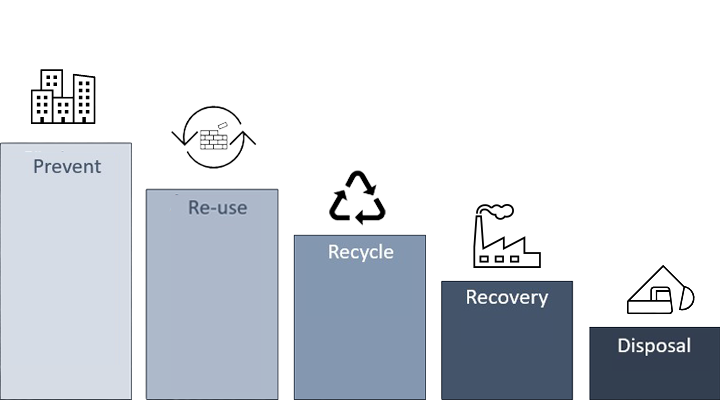
- Prevent – First and foremost, we aim to prevent waste from arising. We do this through careful planning and by preserving existing layouts and building components where possible. This avoids creating demolition waste and reduces the need for producing and transporting new materials.
- Reuse – When materials cannot be preserved in place, we aim to reuse them. We inventory what can be reused, repaired, or refurbished – preferably within the same project or property.
- Recycle – Materials that cannot be reused are, as far as possible, recycled. We require our contractors to sort waste on site and collaborate with partners that ensure proper recycling.
- Energy recovery – If materials cannot be reused or recycled, they are sent for energy recovery, where waste is converted into energy.
- Landfill – Landfilling is a last resort. As little waste as possible should go to landfill, and we track landfill rates in our projects.
Read more about our project with Danske Bank, where reuse was a major focus. (In Swedish).
Contact